
Implementing Digital Personnel Files: A Step-by-Step Guide from Requirements to Rollout
Transitioning to a digital personnel file requires careful planning, a clear understanding of requirements, and a structured approach. This article provides an overview of how companies can best navigate the implementation of digital personnel files—from initial planning to execution.
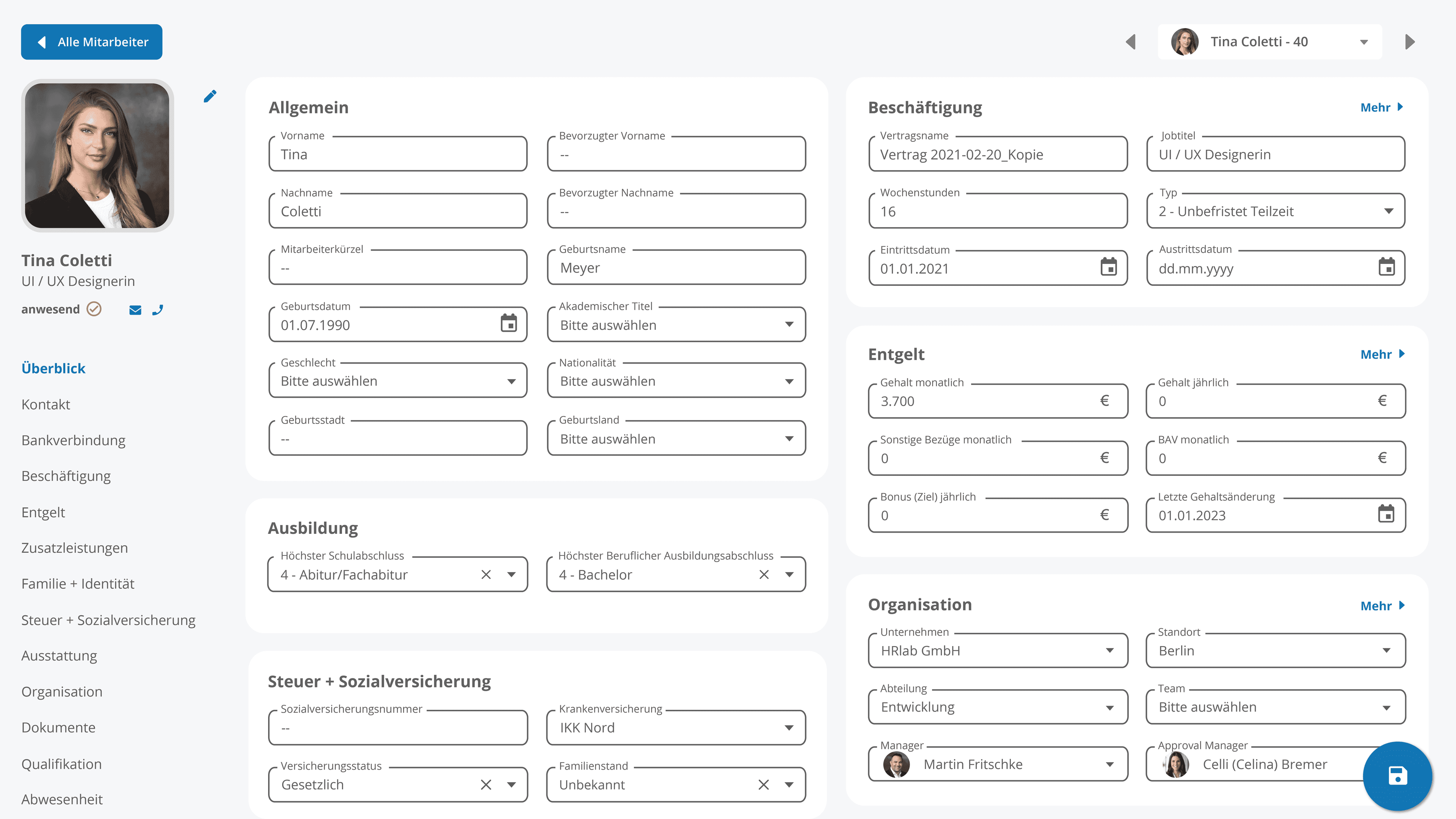
Key Takeaways
- A clear requirements profile is always the foundation for introducing digital personnel files.
- An access control concept and process documentation ensure compliance with internal and legal guidelines.
- The digital personnel file should allow seamless integration with core HR software (e.g., DATEV).
Our Tip for Introducing Digital Personnel Files
Engage HR, Data Protection, and IT right from the start. Involving diverse stakeholders guarantees that when setting up personnel records, both audit-proof compliance and user experience—such as Employee Self-Service and Manager Self-Service—are fully accounted for.
1. Initial Assessment: Clarifying the Starting Point and Objectives
Implementing a digital personnel file does not begin with software installation, but with thorough planning. Only by clearly defining your own requirements and framework conditions can you select a solution that aligns with your specific internal workflows—technically, organizationally, and legally.
1. Define Objectives
What specific challenges should the digital personnel record address? Typical goals include:
- Standardizing and accelerating HR processes
- Establishing centralized, uniform data management
- Fostering more efficient collaboration among HR, managers, and employees
- Ensuring legally compliant, audit-proof documentation
- Enabling location- and device-independent access
2. Involve Key Stakeholders
- To capture requirements comprehensively, all relevant internal departments should be engaged early on:
- HR Department: Workflows, document types, access roles, and operational responsibilities
- IT / Information Security: Technical infrastructure, system interfaces, Single Sign-On (SSO), and security protocols
- Data Protection Officers: GDPR/BDSG compliance, retention/deletion periods, and Technical and Organizational Measures (TOMs)
- Works Council: Co-determination rights under the German Works Constitution Act (BetrVG) and process transparency
3. Evaluate Technical Integration
A digital personnel file must seamlessly fit into your existing IT landscape. Key questions to consider:
- Which core HR, payroll, or ERP systems need to be connected?
- Are there existing cloud or on-premises infrastructures that must be taken into account?
- Are integrations required for payroll software (e.g., DATEV), time tracking, applicant management (ATS), or document management systems (DMS)?
- Which security standards must be met (e.g., ISO 27001 certification, two-factor authentication [2FA], SSO)?
2026/27 Market Benchmark: HRlab Recognized as Category Champion
In the "Professional User Rating: Human Resources 2027" study published by techconsult, end-users directly evaluated 29 top HR software vendors. Based on user feedback, HRlab earned the prestigious "Champion" rating in the PUR Diamond for Digital Personnel Files, HR Suite, Time Tracking, and Payroll.
2. Planning: What Requirements Should the Digital Personnel File Fulfill?
Functional Requirements for Digital Personnel Files
Functional requirements determine how the digital personnel file operates in daily business. Key functions include:
- Digital document storage for employment contracts, references, and leave requests
- Roles and permissions management
- Advanced search and filtering options
- Comprehensive audit logging of all system access
- Interfaces to existing HR and ERP systems
Technical Requirements for Implementation
Technical requirements cover infrastructure, security, and system operations. Essential considerations include:
- Compatibility with the existing IT ecosystem
- Choosing between cloud-based and on-premises deployment
- System scalability and high performance
- Single Sign-On (SSO) and Two-Factor Authentication (2FA)
- Compliance with information security standards (e.g., ISO 27001)
- Backup and disaster recovery protocols
Data Privacy and Compliance Requirements
To prevent legal liabilities, digital personnel files must adhere to strict data privacy standards. This includes:
- Processing personal data in compliance with GDPR and the German Federal Data Protection Act (BDSG)
- Retention and deletion policies adhering to the Commercial Code (HGB) and Fiscal Code (AO)
- Access controls, encryption, and audit-proof storage
- Comprehensive audit logging for complete traceability
3. Creating Digital Personnel Files: Step-by-Step Implementation
Once requirements are finalized, the operational phase begins. The goal is to design the implementation process efficiently—clearing legacy data and setting up future-proof data structures (e.g., for AI analytics). During this phase, digital records are created and synchronized across the HR landscape.
1. Define File Structure and Categories:
Before creating digital files, establishing a standardized folder structure is essential. This ensures that all information is easy to locate and properly categorized. Learn more about the structure of an electronic personnel record. Note: Access permissions are mapped to specific employee roles within this folder structure.
2. Establish an Audit-Proof Permission Concept:
Data privacy (GDPR) is the most critical factor when creating digital personnel records. A granular permission matrix controls who can view sensitive data. Typical access levels include:
- HR Department: Full system access
- Line Managers: Access restricted to relevant personnel data for direct reports
- Employees: Read-only access to their own personal files and documents
Important: Utilizing dedicated digital personnel file software automatically logs every system change, guaranteeing audit compliance.
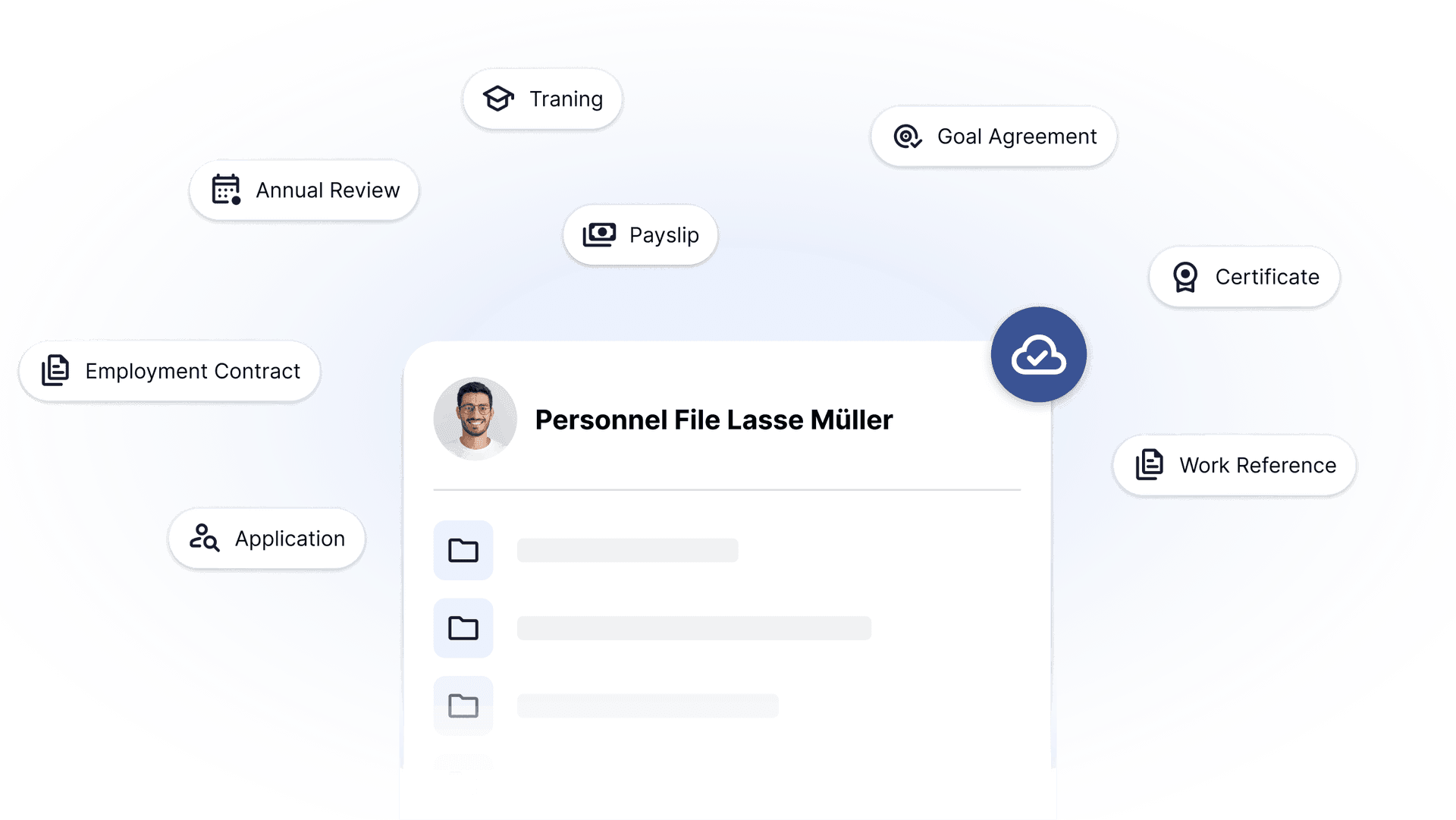
3. Digitizing Legacy Data
There are two primary approaches for converting physical paper files into digital personnel records: internal scanning or outsourcing to specialized scanning service providers.
Key compliance and technical factors to consider:
- GDPR-Compliant Scanning Protocols: Ensure secure document handling during conversion.
- Optical Character Recognition (OCR): Convert scans into fully searchable PDF documents.
- Accurate Data Mapping: Verify correct assignment of files to individual profiles and folder structures.
- Standardized File Naming Conventions: Establish consistent naming rules for easy retrieval.
4. Systematic Creation and Management of Documents
In this final stage, digital employee profiles and record structures are finalized. Focus areas include:
- Automated Workflows: Leverage system triggers to automate approvals, deadline reminders (e.g., end of probationary periods), and escalation processes.
- Data Deletion Concepts: Configure automatic retention and deletion schedules directly within system setup in accordance with commercial law (HGB) and GDPR requirements.
- Procedural Documentation (Verfahrensdokumentation): Creating comprehensive process documentation is mandatory to ensure complete end-to-end traceability (from initial scanning to final archiving). It details how documents are created, edited, archived, and deleted—including defined responsibilities, access controls, and technical workflows. This documentation serves as crucial proof of compliance during legal or data privacy audits.
Risks of Digital Personnel Files
Despite significant efficiency gains, introducing digital personnel files without a structured roadmap carries inherent risks:
- Data Privacy Violations: Unclear retention/deletion periods or excessively broad access permissions.
- Technical Hurdles: Lack of seamless interfaces to payroll accounting systems such as DATEV.
- User Adoption Friction: Insufficient training for HR staff regarding the daily operation of new software.
Digital Personnel Files with a DATEV Interface
Many companies already rely on DATEV for payroll accounting. Connecting your digital personnel file solution directly with DATEV is therefore a critical priority. Whether utilizing DATEV LODAS, Lohn und Gehalt, or Unternehmen online, your chosen digital personnel record solution must support direct integration with the DATEV environment. The following technical prerequisites should be evaluated early in the project:
- Interface capability of the document solution (e.g., via DATEV-Connect)
- Access permissions and configuration for client accounts or tax advisors
- Archiving structure and document formats compatible with DATEV standards
- Automated document synchronization (e.g., pay slips, employment contracts)
When integration is configured correctly, core HR workflows—such as preliminary payroll accounting—can be transferred to DATEV in just a few clicks: securely, legally compliant, and free of manual double entries.
Digital Signatures Streamline Implementation
Numerous documents in a personnel file require legally binding signatures or formal confirmation of receipt—such as employment contracts, supplementary agreements, target agreements, or mandatory documentation under the German Verification of Essential Terms Act (Nachweisgesetz).
To execute these tasks smoothly within digital systems, electronic signatures can be embedded directly into operational workflows. A digital signature feature can trigger automatically whenever document signing is required—for instance, when an employee contract addendum needs updating and signing.
The primary benefit: It creates an end-to-end, transparent workflow that integrates seamlessly into daily HR operations. Crucially, all such digital signature processes must remain fully traceable and audit-proof.
Customer Testimonial: Key Impact Post-Implementation
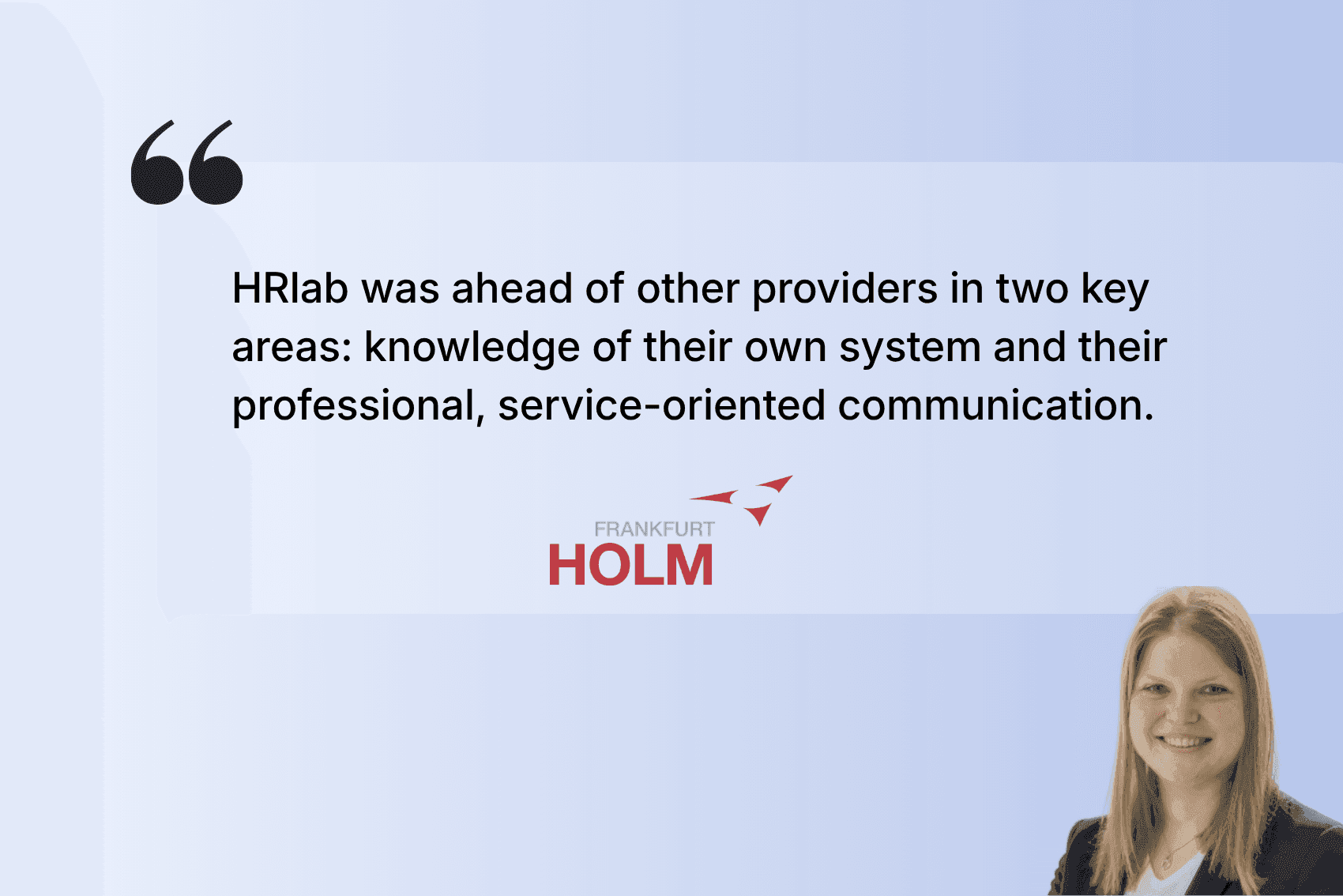
"Document templates for employment contracts and digital signatures—for example, on data privacy documentation—have proven exceptionally practical for us. Equally valuable is the automated filing feature, which instantly routes completed documents to the corresponding personnel file." Jana Eisert, Senior Manager HR & Compliance at HOLM
FAQ
What are the benefits of introducing a digital personnel file?
Digital personnel files reduce paper-based administrative effort, accelerate HR processes, and enable location-independent access to employee documentation. Furthermore, they enhance data security through granular access permissions and streamline compliance with statutory document retention periods.
What belongs in a digital personnel file?
A digital personnel file should contain all personnel-related records, including employment contracts, contract amendments, master employee data, application documents, references, payslips, as well as documentation regarding absences, training, performance reviews, and offboarding records.
What features must a digital personnel file system offer?
A digital personnel file should make HR operations easier and more secure. Essential core capabilities include:
- Clear Structure & Fast Search: Intuitive folder taxonomy and advanced filter functionalities.
- Data Privacy & Security: GDPR-compliant storage supported by role-based access permissions.
- Integration & Automation: Seamless connectivity with core HR software along with automated notifications for deadlines and missing files.
- Flexible Access: Secure remote usability across both office and home-office environments.