Cloud HR Software: Comparison, Features & Benefits
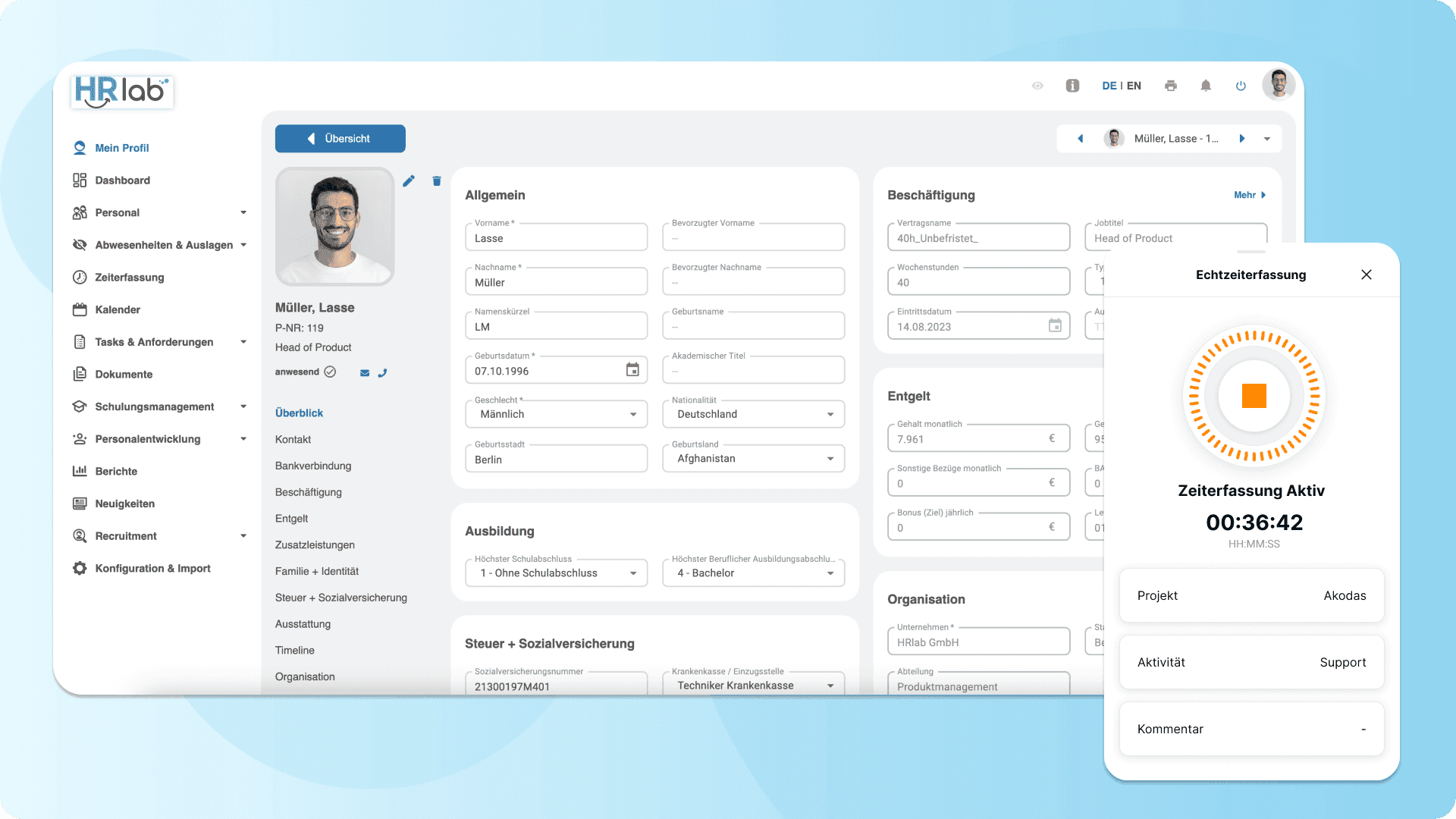
Cloud HR software enables companies to make their HR processes efficient, flexible, and location-independent. Above all, it automates routine tasks, freeing up time for more strategic responsibilities. In addition, employee data is stored centrally in one place, making it accessible at any time for reporting and analytics.
Key Facts
- A cloud HR software stores all HR data and processes in a cloud under the highest data protection standards.
- In contrast, an on-premise solution runs on your internal servers and must be maintained by your in-house IT department.
- The key advantage of cloud HR software is that personnel data can be accessed anytime and from anywhere.
What is Cloud-Based HR Software?
Cloud HR software is a web-based human resources management solution that allows companies to manage their HR processes digitally, centrally, and independently of location. Operated in a secure cloud infrastructure, cloud HR software can be accessed anytime via a browser or mobile app.
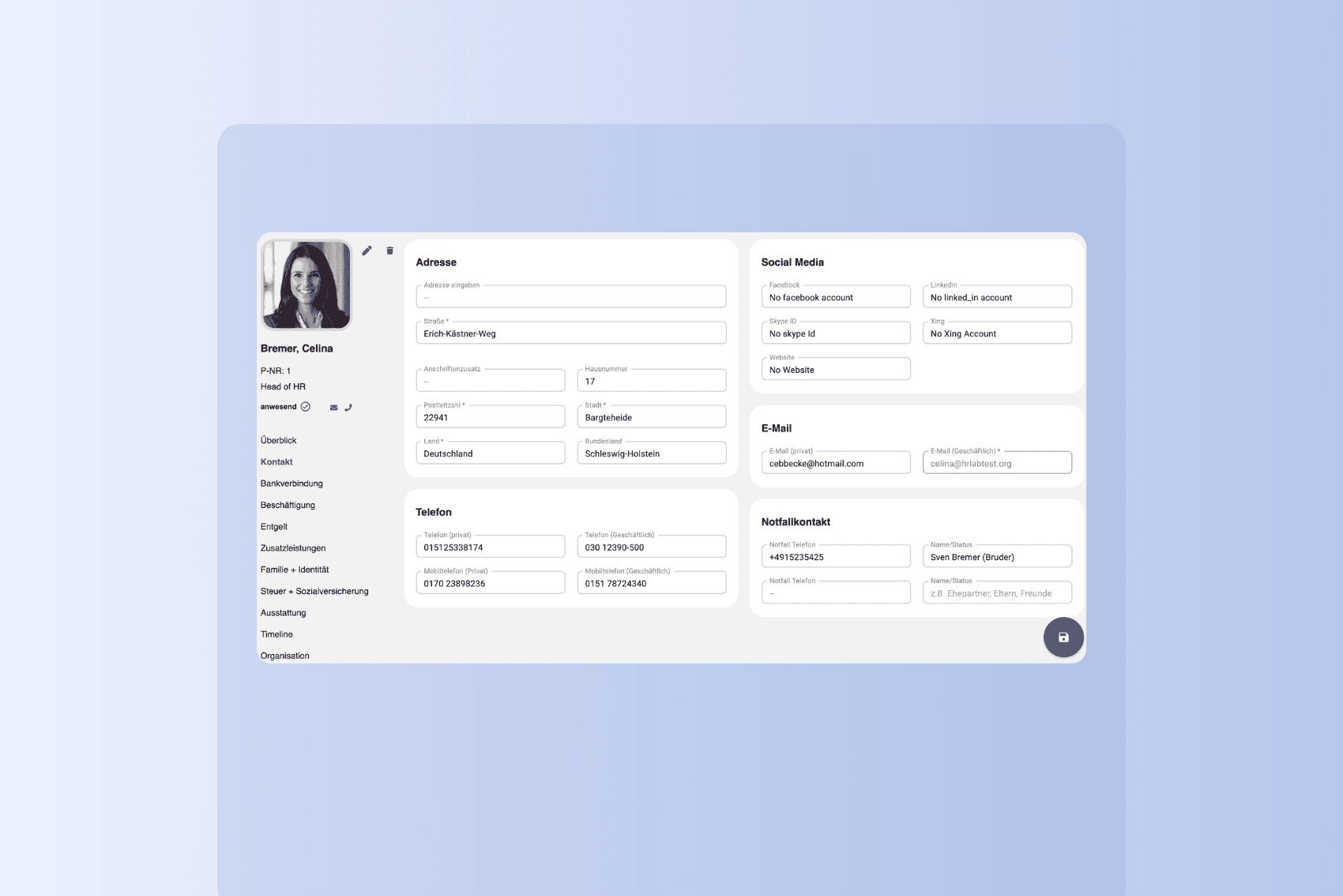
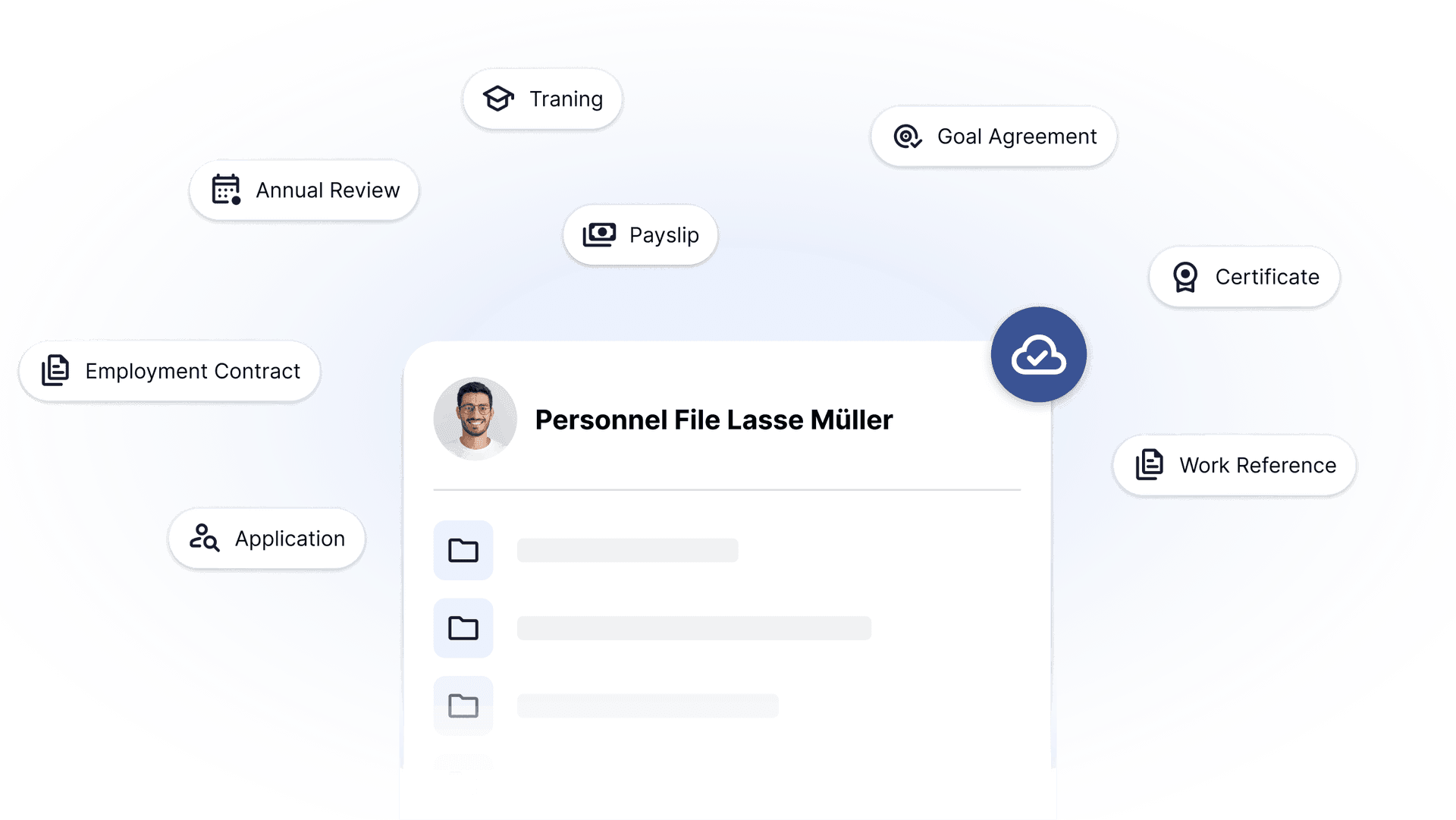
A cloud HR software covers all core HR functions within a single tool. From digital personnel files and applicant tracking (ATS) to preparatory payroll accounting, HR managers handle all their HR work in one application. Providers like HRlab go a step further by offering modular cloud solutions that can be tailored individually to a company’s specific needs—complete with automatic updates, an intuitive user interface, and comprehensive customer support.
Cloud HR Software: Key Features
The following core features of a cloud HR software drive efficiency in the HR department:
Why is it Called the "Cloud"?
The term "cloud" originally originates from the IT visualization of computer networks. In early technical diagrams, the internet was represented as a cloud-shaped icon—a place where data is stored and processed without the user needing to know the exact physical location of the storage hardware.
Applied to HR: When talking about cloud HR software, it means the application does not run on your company’s own servers, but is hosted in an external data center. Users access the software via the internet—just like "logging into the cloud."
Today, the term "cloud" symbolizes:
- Location-independent access to data and applications
- Centralized storage of information in secure data centers
- Scalable IT resources that adapt flexibly to current demands
- SaaS (Software as a Service) solutions, where the provider handles operations, maintenance, and security
Cloud Solution vs. On-Premise HR Software
When choosing the right software solution, HR departments frequently face the question: Cloud or On-Premise? The right choice depends on individual factors such as company size, available IT resources, and the required functional scope.
| Feature | Cloud HR Software | On-Premise HR Software |
|---|---|---|
| Installation | No local installation required | Hosted on internal IT server infrastructure |
| Updates | Automatic, handled by the provider | Manual, performed by in-house IT |
| Access | From anywhere via web browser or mobile app | Restricted to internal network or via VPN |
| Cost Model | Ongoing subscription / Usage-based | High upfront initial costs |
| IT Resource Requirements | Low | High |
The main difference between the two models lies in how they are operated: On-premise HR software is installed and hosted locally on a company’s own servers. While this keeps full control over data and systems in-house, you must manage all maintenance, updates, backups, and IT security yourself. This requires internal technical expertise and personnel—often a major bottleneck, especially for mid-sized companies.
In addition, on-premise solutions incur high upfront costs for licenses, implementation, and hardware, alongside ongoing expenses for maintenance and further development. New regulatory requirements or software features usually require additional investments because updates are not integrated automatically.
Cloud HR software (SaaS model) operates very differently: The provider manages the complete technical infrastructure in a certified data center, ensuring GDPR-compliant data protection, automatic software updates, and continuous enhancements. Companies benefit from lower IT costs, greater flexibility, and fast access to all HR data—anytime, anywhere.
Recommendation: If your IT and HR departments operate with limited resources and you are planning to introduce a new HR software, a cloud solution is strongly recommended. Aside from dedicated guidance during the implementation phase, you benefit from ongoing customer support during daily operations, and product enhancements will continue to support your evolving requirements.
HR Cloud Solutions in Comparison: User Study 2026/27
In the "Professional User Rating: Human Resources 2027" study conducted by techconsult, 5,940 professional users evaluated digital HR solutions across ten product areas. The study results reflect the real-world experiences of users who work with these platforms every single day.
Across the nine provider evaluation categories, HRlab scored particularly high in Service and Support, Price/Entry Costs, and overall Provider Satisfaction regarding the solution. In the three solution evaluation categories, HRlab delivered strong performance with high ratings for essential baseline criteria—such as depth of functionality and integration—as well as measurable business utility. Furthermore, the findings highlight strong brand loyalty: users who choose HRlab trust the solution long-term.
HRlab Named Champion Once Again
In the Professional User Rating: Human Resources 2027 study conducted by techconsult, 39 Cloud HR Suite providers were evaluated directly from practical application. As a result of the PUR Diamond 2027 rating, the study—and the users themselves—awarded HRlab the title of "Champion" for the third time.
How Much Does Cloud HR Software Cost?
The cost of cloud HR software naturally varies from provider to provider, but the pricing structures are generally very comparable. First, there are user license fees—meaning you pay a set amount per active employee per month.
For example, with HRlab: The Core version starts at €6 per user per month. HRlab utilizes a modular pricing model that can be billed either monthly or annually. You can flexibly add modules such as Time & Absence, Recruitment, or Talent Management as needed. In an independent user study, HRlab ranked first in price and entry costs compared to other top providers.
Additionally, there is typically a one-time setup fee for onboarding the cloud HR software and training your employees. Optional services, such as specialized coaching, can also be booked at any time.
Bottom line: In the long run, cloud HR software is the more cost-effective alternative to on-premise systems. Although you invest initially in implementation and training, your ongoing responsibilities are limited to predictable recurring license fees.
Data Security Myth: Cloud HR Software
A common misconception that persists today is that on-premise software is inherently more secure than cloud software. While exceptions exist—such as major banking data centers with ultra-high internal security—the average mid-sized company usually cannot match the security infrastructure of a professional cloud data center internally.
In mid-market enterprises, internal hosting often fails not only due to financial cost, but also due to the shortage of specialized IT personnel on the job market. Maintaining that level of security requires a dedicated 24/7 team of IT security experts.
By contrast, cloud HR software providers store data in specialized external data centers. Because data security is a core component of their business model, companies can rest assured that their data is stored according to the highest industry standards. While reviewing technical details (such as cloud sovereignty) is always advisable, cloud HR software matches—and often surpasses—the security level of internal hosting setups.
What Are the Benefits of Cloud-Based HR Systems?
The primary benefits of cloud HR software include drastic reductions in internal IT costs, real-time access from any location, and the automation of error-prone routine tasks. Because the system operates as Software-as-a-Service (SaaS), the provider guarantees GDPR compliance and automatic security updates without placing a strain on internal resources.
1. Minimized IT Effort & Maximum Data Security
Companies adopting a cloud HR solution do not need their own server infrastructure or internal maintenance capacity. The SaaS provider delivers a turn-key software experience and handles ongoing product development.
This includes full compliance with GDPR and data privacy standards. Modern cloud solutions like HRlab store sensitive personnel data exclusively in high-security, ISO 27001-certified data centers with automated backups and encrypted data transmission.
2. Location Independence for Hybrid Teams
A major advantage of cloud HR software is its complete operational flexibility. HR teams and employees can access a single source of truth from anywhere via web browser or mobile app. Any internet-connected device is sufficient to manage HR processes efficiently:
- Compliance-Ready Time Tracking: Record hours flexibly via smartphone, desktop, or terminal—ideal for field workers, mobile teams, and deskless employees.
- Digital Absence Management: Through Employee Self-Service (ESS), employees submit sick leaves online. The system updates shift schedules and coverage rules automatically in real time.
3. Increased Efficiency Through Automation
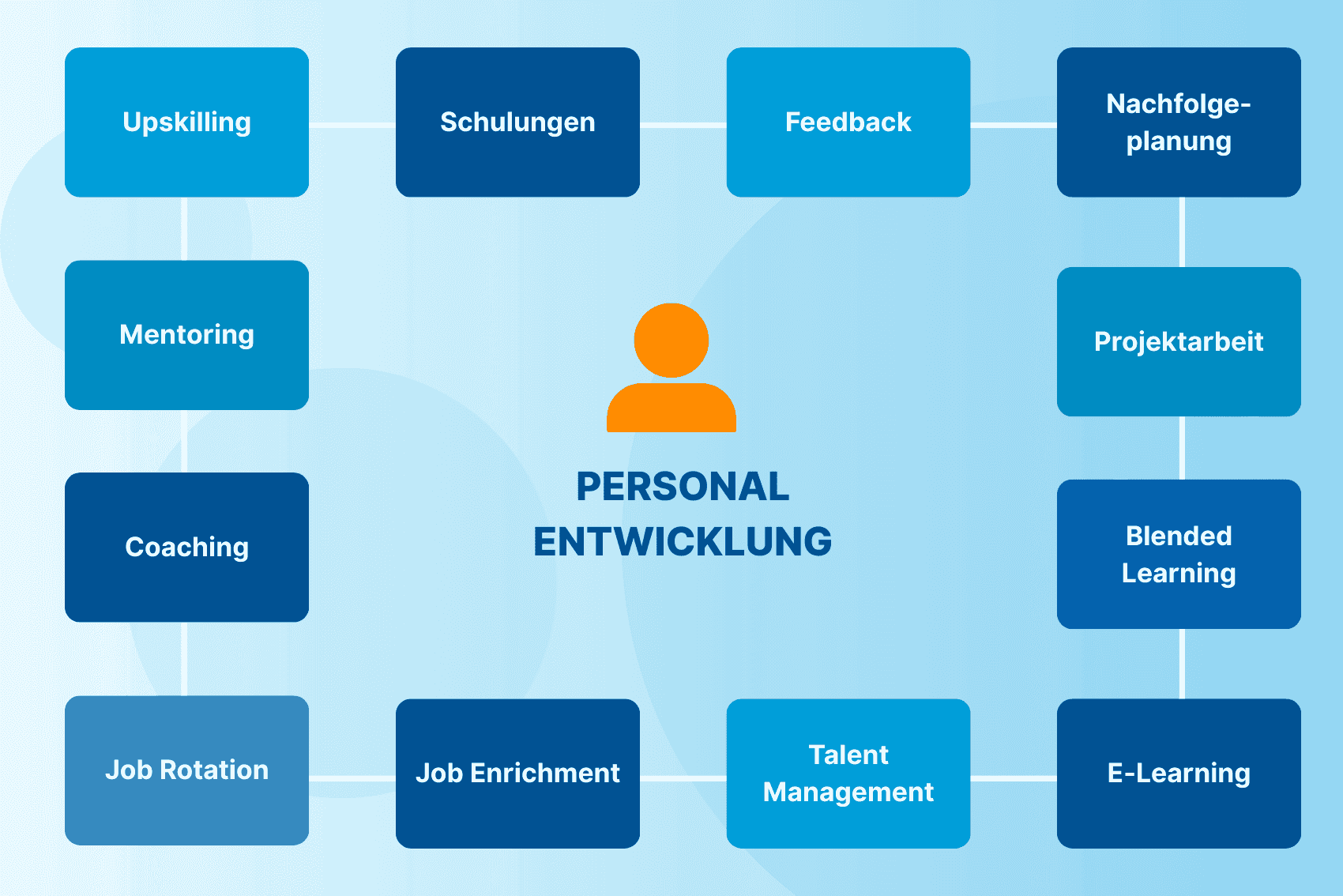
Cloud HR software automates repetitive HR processes—ranging from applicant management and digital employee files to payroll preparation. This minimizes administrative workloads and simplifies approval workflows, giving HR departments time to focus on strategic initiatives like talent management, employee development, and employer branding.
4. Financial Flexibility: Scalability & Cost Transparency
Unlike rigid on-premise systems, a modern cloud architecture adapts dynamically to your business growth:
- Agile Scalability: The system scales seamlessly alongside your headcount. New locations or additional features can be activated or scaled down modularly with a single click.
- Full Cost Transparency: Instead of high upfront investments for servers and perpetual software licenses, you pay predictable monthly or annual fees that scale flexibly based on team size and active modules.