
360-Degree Feedback
Seamlessly integrate employee feedback into your daily workflow with HRlab. No extra meetings, no complex processes. Enable your team to share feedback directly—whether spontaneously or for a completed project.
Cloud-based
Thanks to cloud technology (SaaS), HRlab is ready to use in no time, intuitive to handle, and adapts flexibly to your HR processes.
Focus on SMEs
HRlab is tailored specifically to small and medium-sized enterprises as well as growing businesses with up to 2,000 employees.
Maximum Data Security
HRlab is hosted exclusively in high-security data centers in Kempten and Berlin – ISO-certified and GDPR-compliant.
360-Degree Feedback: Anonymous, Transparent & Secure
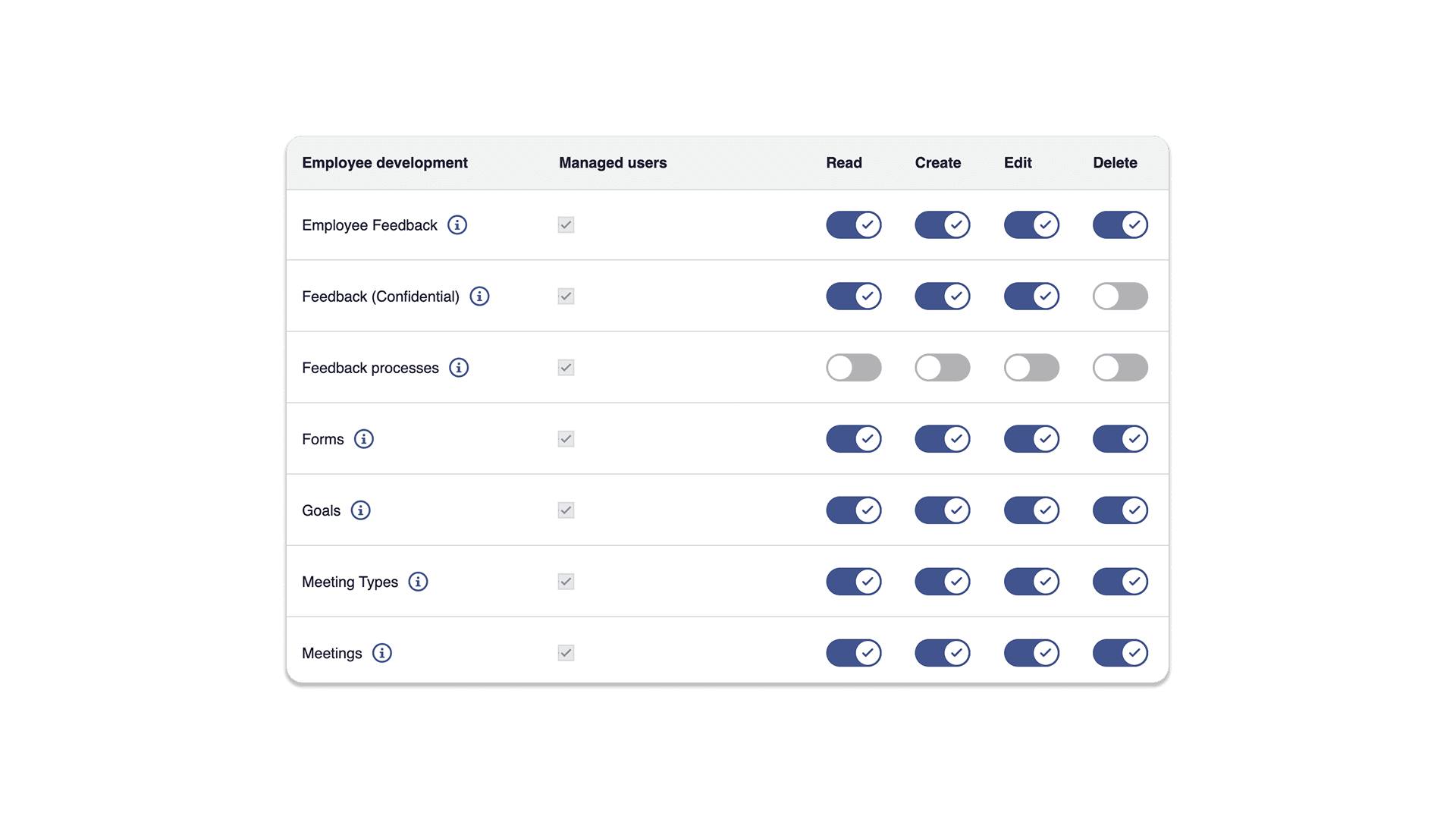
HRlab ensures GDPR-compliant data storage within the EU, role-based access control, and guaranteed anonymous submissions. Every piece of feedback is securely stored right inside the employee’s digital personnel file.
All Insights at a Glance: Clear & Structured
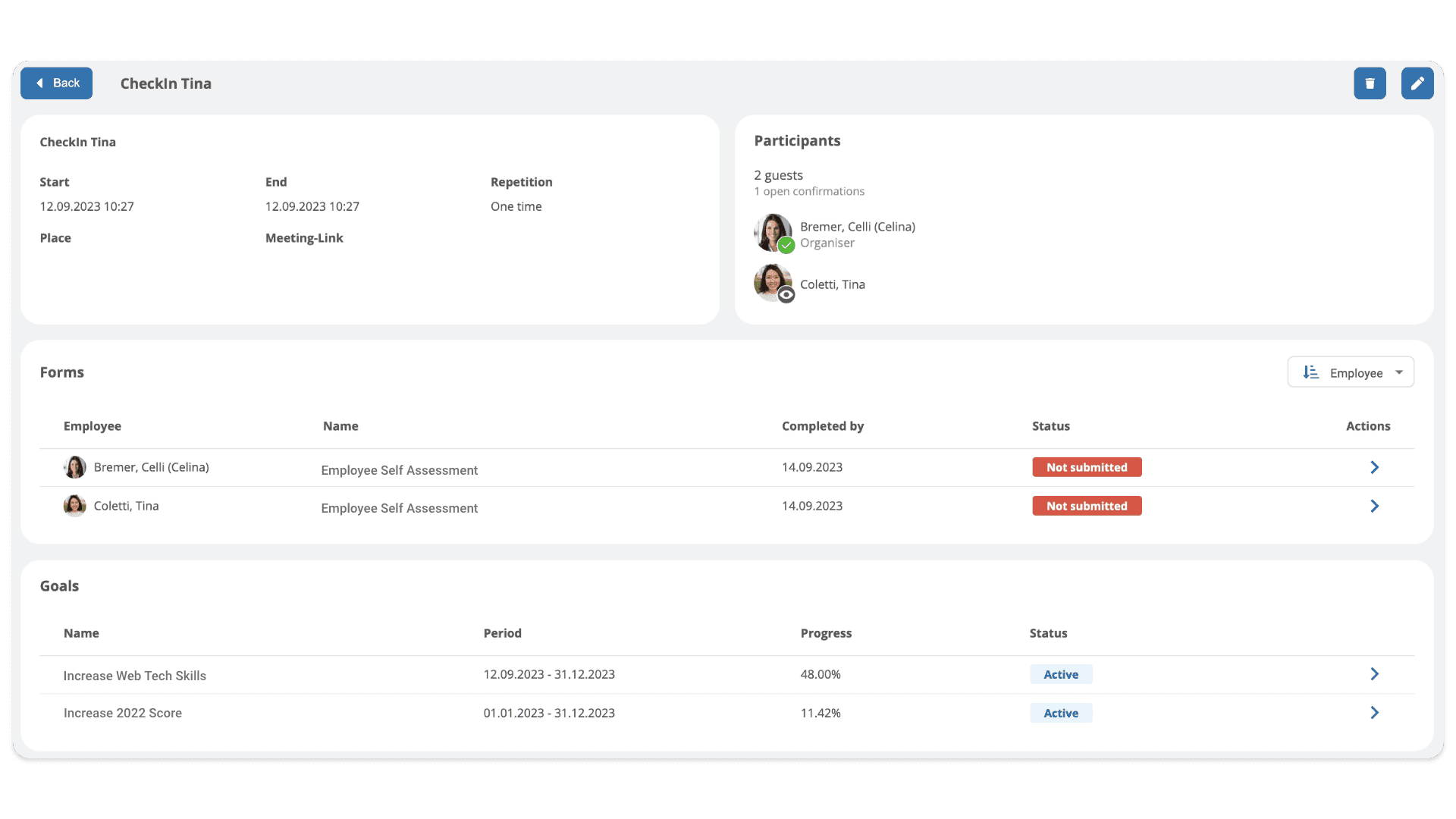
HRlab aggregates 360-degree feedback in one central, intuitive dashboard. HR teams and managers keep a clear view of development trends, strengths, and potential areas for growth at all times.
Feedback Crafted for Talent Development
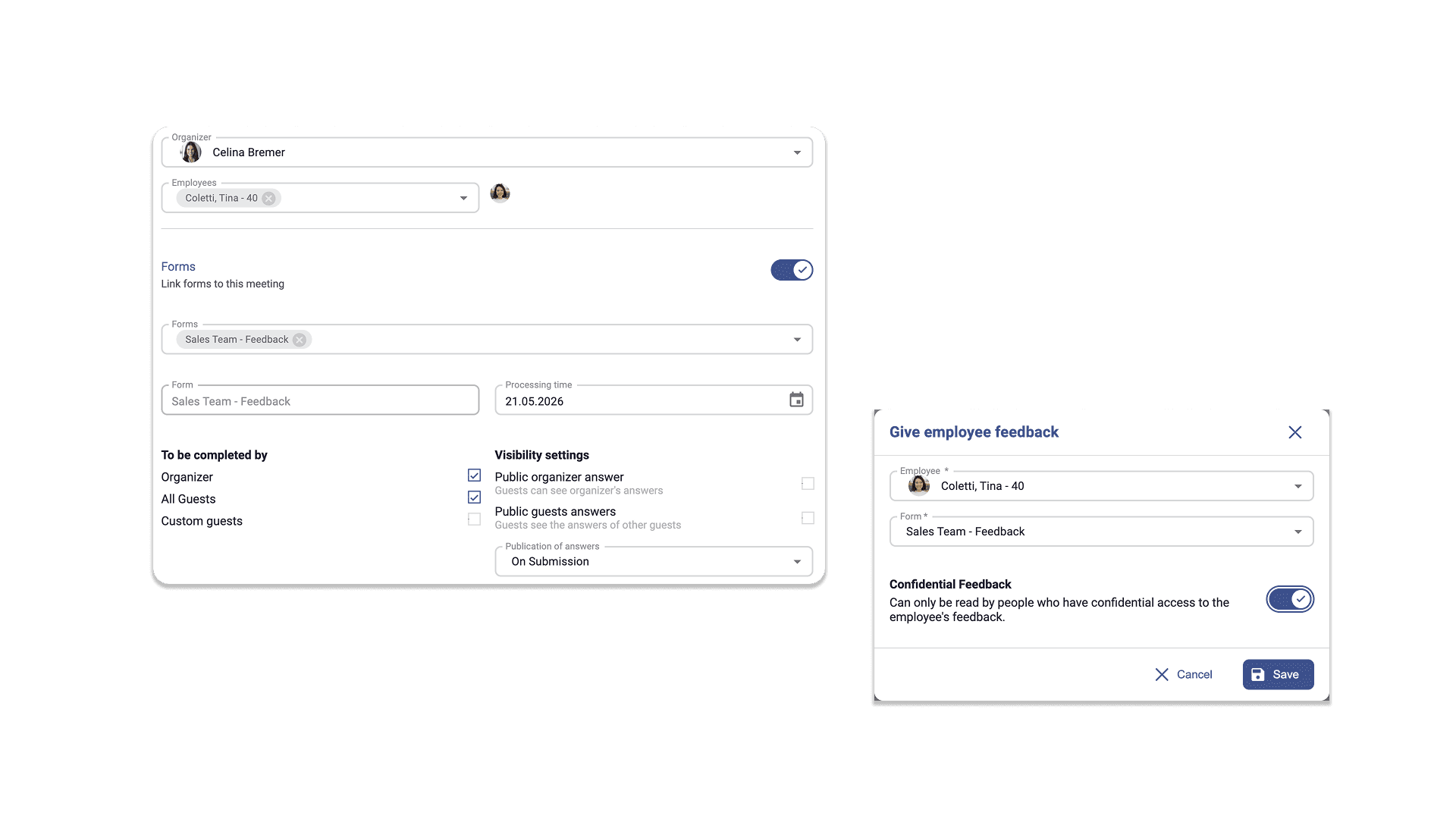
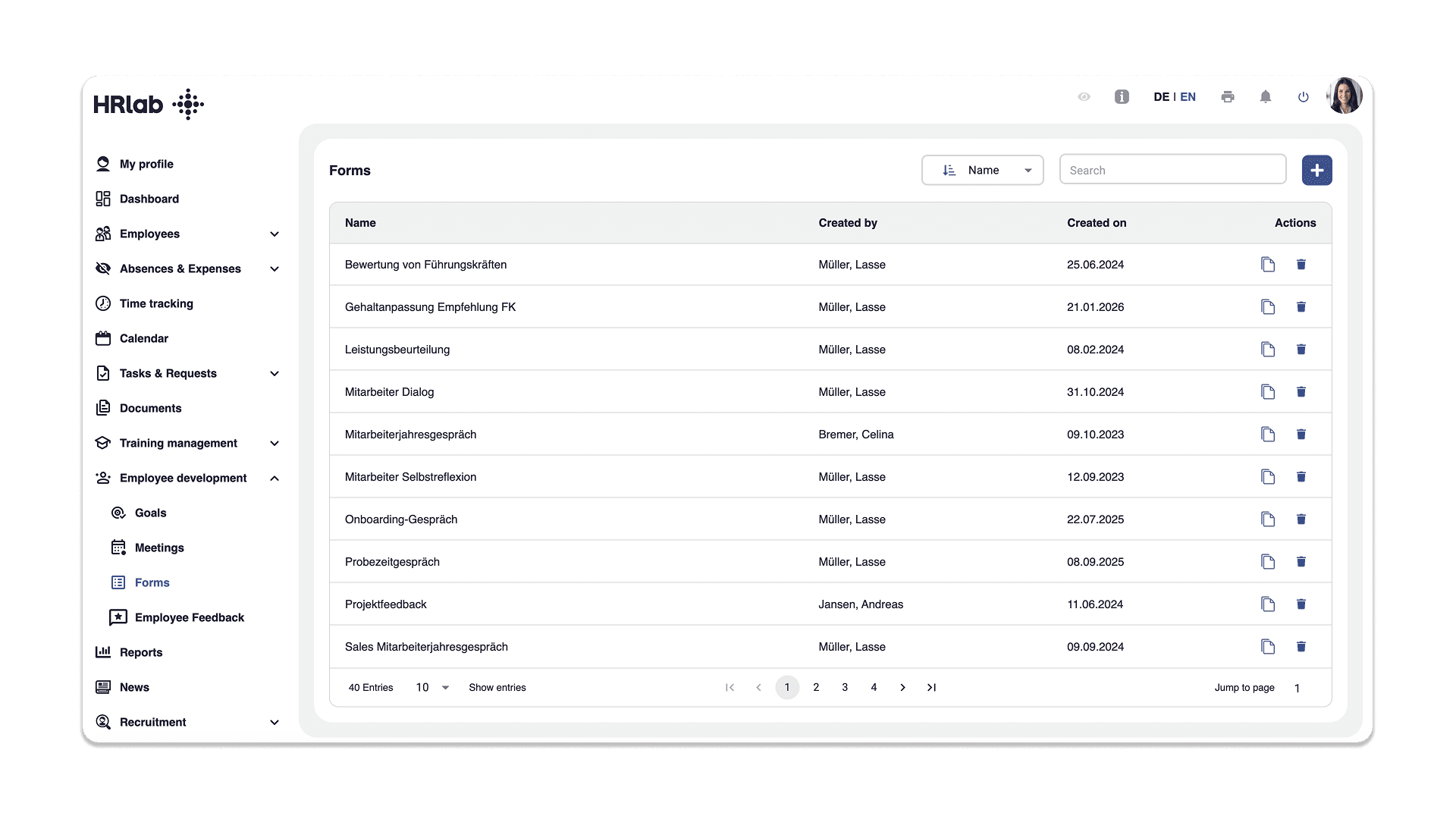
Easily customize questionnaires and feedback workflows to fit your needs. With HRlab, every department gets the exact insights that matter—efficient, scalable, and perfectly tailored to your organization.
FAQ
What is 360-degree feedback?
360-degree feedback is a comprehensive tool for evaluating employees and managers. It goes beyond mere self-assessment by gathering insights from supervisors, team members, and, if applicable, external partners. The goal is to build a holistic picture of skills, behavior, and growth potential, making strengths visible and outlining actionable steps for personal and professional development. Incorporating these diverse perspectives significantly enhances the overall quality and depth of the feedback.
What is an example of effective 360-degree feedback?
Effective 360-degree feedback delivers constructive, nuanced, and anonymous insights from multiple perspectives. For example, a manager might receive feedback from their direct reports on communication style, leadership, and decision-making, while peers evaluate their collaboration, reliability, and conflict resolution skills. This is then paired with the manager’s own self-assessment. The results are clearly structured to highlight strengths, development areas, and concrete actionable insights—enabling targeted growth rather than just providing generic scores.
Why should companies establish regular employee feedback?
Because regular employee feedback boosts motivation, engagement, and job satisfaction. It helps surface issues early on and empowers companies to continuously improve leadership, processes, and overall teamwork.