HR Technologies
Building and Sustaining a Feedback Culture: How Tools Support HR

Marlen Kothen
on November 20, 2026 • 3 min. reading time
Building and sustaining a feedback culture means making open, regular feedback part of everyday work, without anyone fearing negative consequences. Most companies have good intentions. What they lack is time, structure and accountability. This is where digital tools come in. They send reminders about upcoming conversations, give managers ready-made templates and make sure agreements don’t get lost.
What does it mean to live a feedback culture?
A real feedback culture with regular one-to-ones shows up in day-to-day work, not in mission statements. Managers give timely feedback, employees give feedback to their managers, and colleagues exchange views as equals. This includes both positive and constructive feedback, as well as upward feedback and 360-degree feedback. The foundation is psychological safety: people who give honest feedback shouldn’t have to worry about repercussions.
How companies should go about it
Most companies know that regular feedback works, but few manage to make it happen consistently. The answer is to use the right tools to support the process. The following steps help you introduce a feedback culture and stick with it:
1. Assess the current situation: A short anonymous survey shows how employees experience feedback today. 2. Define formats and frequency: For example, one-to-ones every two weeks, project feedback after completion and 360-degree feedback once a year. 3. Set up templates in the tool: HR defines conversation types, guiding questions and visibility settings once, centrally. 4. Equip managers and let them lead by example: A short training session on observation, impact, request and managers asking their own line managers for feedback send the strongest signal. 5. Measure the impact: After a few months, survey employees again, check meeting completion rates and adjust formats.
Removing the admin burden
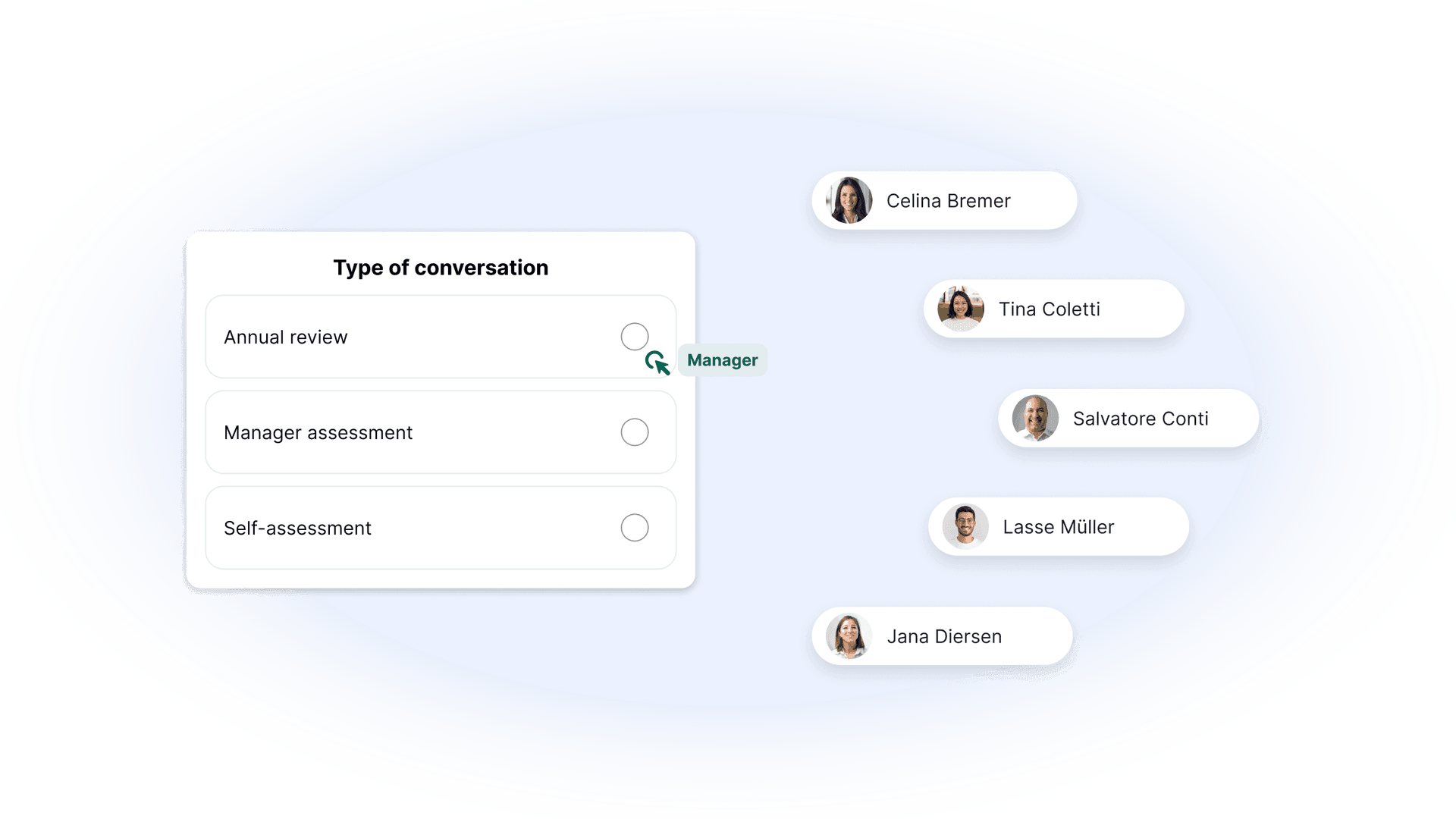
In theory, culture change sounds logical. In practice, it often fails for lack of structure. Paperwork, cluttered Excel sheets and forgotten follow-up meetings kill motivation. On top of that, sensitive development data quickly raises the question of GDPR compliance. This is where HR software like HRlab comes in. It takes the time-consuming admin off HR teams’ plates and provides a reliable framework for dialogue:
| Everyday HR challenge | Consequence | Digital solution with HRlab |
|---|---|---|
| Meetings get forgotten when things get busy | Feedback only happens in the annual review | Automatic reminders for managers and employees for regular check-ins and review cycles |
| Every manager runs conversations differently, notes are unstructured | Feedback is inconsistent and of little use | Customisable conversation templates and questionnaires for each conversation type, with rating scales, free text and structured meeting notes |
| Fear of giving honest answers | Feedback stays superficial | Anonymised analysis, with the option to hide the reviewer’s role |
| Agreements and development goals are forgotten | Employees experience a lack of follow-through | Central, GDPR-compliant documentation in the digital employee file, goals with progress tracking and follow-up meetings |
| 360-degree rounds are time-consuming | Feedback from multiple perspectives is rarely gathered | Automated invitations and clear analysis at the click of a button |
| No overview for HR | The impact of the feedback culture remains unclear | Reports across teams and locations |