
Performance Management Process in HR: Strategy & Implementation
The performance management process forms the strategic foundation of targeted personnel development in modern companies. Beyond mere performance appraisal, it systematically links individual employee goals with the overall strategy of an organization. Driven by digitalization and new legal requirements, performance management is transforming into a central success factor for employee retention and employer attractiveness. HR departments must understand how to map the performance management process holistically to build a future-proof workplace culture.
Key Takeaways
- The performance management process is a continuous cycle of goal setting, ongoing tracking, feedback, and individual employee development.
- Comprehensive frameworks replace rigid year-end reviews with frequent check-ins to embed timely and actionable feedback into daily routines.
- Effective performance evaluations strictly differentiate between quantitative work results and demonstrated behavior aligned with corporate values.
- The requirements of the EU Pay Transparency Directive and works council co-determination rights demand objectively justified and seamless documentation of all performance and compensation decisions.
What is a performance management process?
A performance management process is a systematic, continuous cycle designed to plan, monitor, evaluate, and direct individual employee performance within an organization. It aligns the daily work of employees with strategic business objectives while fostering their ongoing professional and personal development. Unlike isolated annual performance appraisals, modern performance management prioritizes a continuous feedback culture and the early identification of growth potential.
Core Phases of the Performance Management Process
The modern performance management process functions as a closed loop that provides clear guidance to leaders and team members throughout the entire year.
| Process Phase | Core Task | Primary HR Tools |
|---|---|---|
| 1. Goal Planning & Alignment | Defining qualitative and quantitative targets while aligning role expectations. | OKRs, KPIs, Job Grading |
| 2. Continuous Performance Tracking | Monitoring progress throughout the year and delivering real-time feedback. | 1:1 Check-ins, Peer Feedback |
| 3. Evaluation | Holistically assessing achievements and behaviors alongside peer calibration. | Self-Assessments, Talent Reviews |
| 4. Development & Compensation | Deriving individual growth measures and connecting insights to reward systems. | Learning Management, Personal Development Plans, Salary Adjustments |
Digitizing the Performance Management Process with HRlab
With a modular All-in-One HR Software like HRlab, human resources teams gain a practical solution to digitally anchor the entire performance management process.
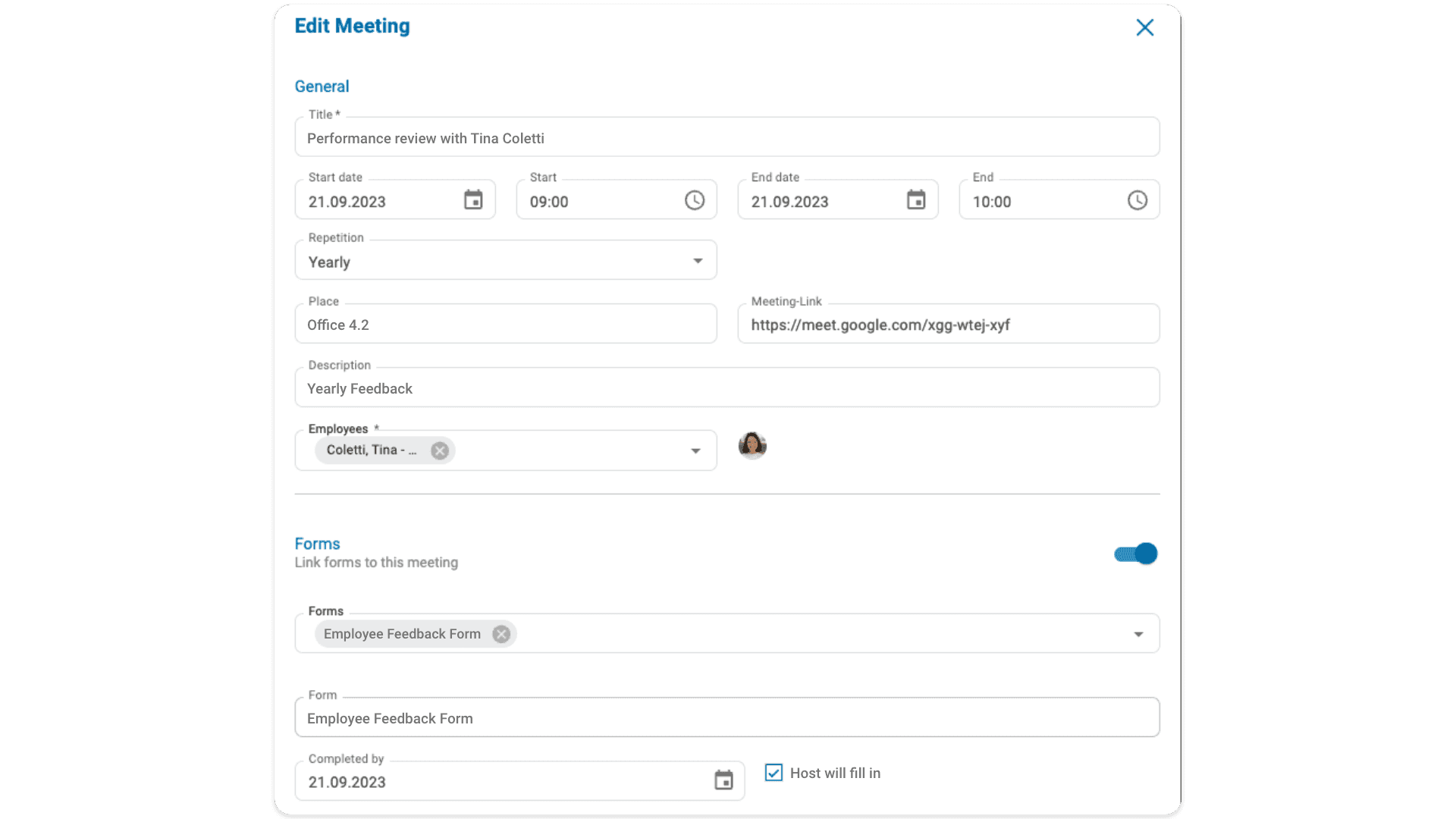
In HRlab Talent Management, managers flexibly link target agreements with sub-goals and individual weightings:
- Predefined conversation types automatically load the correct questionnaires for 1:1 check-ins or annual reviews.
- Employee review protocols are recorded in an audit-proof manner.
- Every subsequent adjustment creates a transparent new version that employees can digitally confirm or reject.
- Identified qualification needs flow directly as measures into the integrated training management.
- Reports such as "Conversation types per employee" guarantee full process control for the HR department.
Implementing the Performance Management Process Easily with HRlab
Create and track goal agreements quickly and easily: Collaboratively edit company goals, department targets, or personal development objectives. Intuitive questionnaires enable you to capture feedback while simultaneously preparing for upcoming performance reviews.
Expert Advice: Continuous Feedback Instead of Annual Retrospectives
In many mid-sized companies, the performance management process frequently creates organizational friction and dissatisfaction among managers and employees alike. Drawing from 20 years of hands-on experience, psychologist and HR consultant Barbara Wiecher identifies typical design flaws that compromise the effectiveness of this tool:
Conducting regular check-ins throughout the year ensures that feedback is delivered in a timely manner. The formal year-end review then serves merely as a summary of topics already discussed during daily operations, eliminating any unexpected surprises at the end of the year. Read the full insights from Barbara in our Blog: Performance Management in HR: From Judgment to Real Dialogue.
Legal Framework for HR According to German Law
A structured performance management process protects companies from legal risks and provides the foundation for compliant HR management.
EU Pay Transparency Directive (Directive EU 2023/970)
The requirements of the EU Pay Transparency Directive oblige employers to make pay structures transparent and ensure equal pay for equal work or work of equal value. Performance-related salary differences remain permissible, but they must be based on objective, gender-neutral, and fully documented criteria. Subjective decisions regarding bonuses or performance metrics without a documented data basis expose companies to substantial liability risks.
Works Council Co-Determination Under the German Works Constitution Act
When designing and introducing performance evaluation systems, mandatory co-determination rights of the works council must be observed:
-
§ 87 Para. 1 No. 6 BetrVG: The works council has a mandatory right of co-determination regarding the introduction and application of technical devices designed to monitor the behavior or performance of employees. This applies to digital HR software solutions and performance modules.
-
§ 94 Para. 2 BetrVG: Assessment principles and standardized forms used for evaluating the professional and personal performance of employees require the explicit consent of the works council.