
Future Workplace
Shaping Neurodiversity in the Workplace: Best Practice

Marlen Kothen
on July 24, 2026 • 5 min. reading time
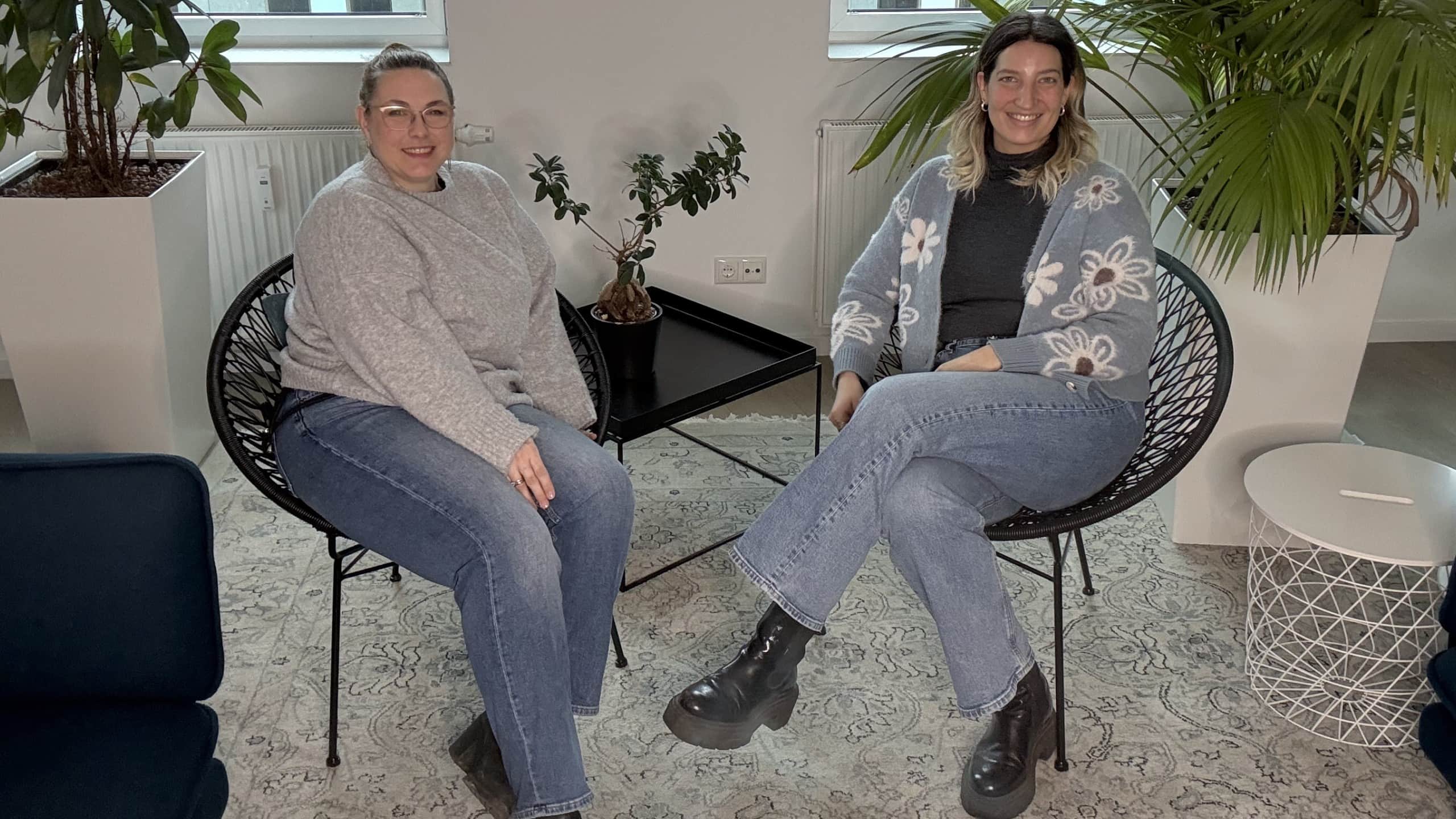
In this episode of our podcast Lesley and expert Nadine build directly on the foundations laid in the first episode. While the previous episode focused purely on understanding neurodiversity, this one gets concrete: many companies still unconsciously exclude neurodivergent talent in their day-to-day HR processes. This leads to frustration, high turnover, and missed market opportunities. We show how companies can escape these patterns, empower managers to act, and generate real business impact through targeted neuro-inclusion.
Where unconscious exclusion happens
Companies build barriers, usually unconsciously, in almost all classic HR categories—from employer branding to recruiting to working conditions. According to Nadine, leadership is also the biggest lever that needs to be adjusted, since poor leadership is considered the main reason why employees leave a company.
About Nadine
Nadine Schomacker is the founder of People Champ, through which she now provides companies with practical solutions for neuro-inclusion in HR strategy. After training as a teacher, she moved into the HR field. Through her daughter's diagnosis, she came across the topic of ADHD herself and eventually received her own official diagnosis. Confronted with numerous barriers in her own working life, she made it her mission to advise HR teams, managers, and companies, and to build neuro-inclusive structures.
Why Ignoring neurodiversity in the workplace is not a good idea
- Productivity & innovation: Large studies show that adapted structures, in which neurodivergent people can unfold their full potential, lead to up to 30–40% more productivity. In addition, 19% higher revenue can be achieved through innovations—for example in fields like AI, where neurodivergent people often show strong abilities.
- Retention: Employee retention increases by 10–20%.
- Recruiting advantage: The younger generation is growing up with a much more open awareness of diagnoses and specifically chooses employers based on these criteria. Companies that don't invest here lose their competitive edge to the competition.
Neuro-inclusive vs. neuro-affirmative
In modern HR work, two terms complement each other to describe a fundamental attitude:
- Neuro-inclusive: Here, participation takes center stage. We create framework conditions to bring people along and break down barriers.
- Neuro-affirmative: This approach goes a step further. It works in an affirming, encouraging way. Instead of compensating for deficits, individual strengths are celebrated, highlighted positively, and put to targeted use.
| HR Area | Classic Practice (Barrier) | Neuro-affirmative Alternative (Inclusive) |
|---|---|---|
| Recruiting preparation | Spontaneous, unstructured questions during the in-person appointment. | Send the agenda in advance to provide orientation and a sense of security. |
| Interview format | Mandatory in-person appointments with large panels. | Hybrid, virtual, or asynchronous interviews (send questions in advance, applicant records a video). |
| Work design | Rigid core working hours and fixed requirements for everyone. | Maximum flexibility in the working environment and in scheduling one's time. |
Leadership's responsibility
Anyone who tries to impose one huge, rigid change-management plan on the entire company from A to Z all at once will fail. Change often triggers fear in people. If HR wants too much at once, managers and employees can no longer see the wood for the trees, feel overlooked, and get lost along the way.
Managers' fear of making mistakes
As soon as awareness of neurodiversity develops, some managers freeze up out of fear of doing something wrong. The solution is simple: humanity and openness. It's completely fine to say: "I don't actually know right now. Could you give me some input on what would help you?"
In addition, prejudice, shame, and fear keep many affected people from sharing an official diagnosis. Collaboration should therefore never be reduced to a mere piece of paper or a medical label.
The focus must be purely on individual needs. In the end, neuro-inclusion and a neuro-affirmative approach support all employees in a company, not just the 15 to 20 percent of the world's population who are neurodivergent. It improves the working reality for the entire workforce.
The great thing about neuro-inclusion is that it supports all employees, not just neurodivergent ones—though it supports them especially.
Do's and don'ts for HR & managers
- Do: Proceed step by step. It's advisable to pick out a single process or area, work through it thoroughly, and only then move on to the next logical step.
- Do: Use existing knowledge. Often there are already employees internally who are familiar with the topic and can activate this knowledge.
- Do: As a manager, ask directly and simply: "What do you need from me as your manager, and from your environment, to be able to work well?"
- Don't: Don't engage in "neuro-washing." If the topic is celebrated loudly in external employer branding, but internally stays limited to purely pro-forma "lunch & learn" formats without living out real structural change, the workforce's trust is lost.
First simple steps for implementation
For companies that want to get started on neuro-inclusion without a large budget or lengthy change processes, there are proven, low-threshold approaches available:
- Foster internal exchange & activate knowledge: Employees are often already dealing with this topic privately. Setting up internal working groups (employee resource groups) helps make this knowledge visible and establish an initial feedback culture.
- Use digital training offerings: To build a basic understanding across the whole team, e-learning courses are a good option. HRlab's specialized online course, for example, provides an excellent foundation for this.
- Set targeted impulses through lunch & learns: Short formats of 30 to 45 minutes, held online in parallel with the lunch break, are ideal for initial knowledge boosts. For example, the following options work well: Option A: a purely expert talk followed by an open discussion or Q&A round. Option B: a short interactive talk combined with an integrated mini-workshop for direct application within the team.
- Bring in outside expertise: When uncertainties exist or processes need to be specifically audited, an outside perspective protects against organizational blind spots. Experts like Nadine help redesign existing structures to be neuro-inclusive.