
Sick Leave: Legal Regulations for Employers & Employees in Germany
How quickly employees must provide a medical note depends on company policy—legally, it is currently required after three days of illness. However, the German government plans tighter sick leave rules for 2026, including medical certificates from day one and the abolition of phone-based notes. What is the current process for sick leave, how does continued pay work, and what rules apply to child sick leave days?

Key Takeaways
- An instance of illness must be reported to the employer immediately.
- For a sick leave lasting longer than three days, a doctor must be consulted to obtain a certificate of incapacity for work.
- The medical certificate is only valid for a specified timeframe and requires a so-called follow-up certificate if extended.
- In exceptional cases, a sick leave note can be issued retroactively for up to two, maximum three days.
- In cases of prolonged illness, employees continue to receive their normal salary for up to six weeks.
Sick Leave and the Legal Framework in Germany
A sick leave notification (officially: duty to notify and provide proof) regulates communication between employee and employer in the event of incapacity for work. In German labor law, this process is primarily defined by the Continuation of Remuneration Act (Entgeltfortzahlungsgesetz - EFZG).
Duty to Notify and Provide Proof
In the event of illness, employees are subject to two essential obligations:
- Duty to notify (§ 5 para. 1 EFZG): The illness and its expected duration must be reported to the employer immediately (without culpable delay). Ideally, this should occur before or at the start of core working hours. The method used to report sick leave (phone, email, messenger, or HR software) depends on internal company guidelines.
- Duty to provide proof: If the sick leave lasts longer than three consecutive calendar days, a medical certificate must be provided no later than the following workday.
- Note: Employers are legally entitled to request a medical certificate starting from the very first day of sick leave (§ 5 para. 1 sentence 3 EFZG).
The Electronic Certificate of Incapacity for Work
Since January 1, 2023, the eAU process has been mandatory for individuals with statutory health insurance. The traditional paper-based "yellow slip" for employers has been largely eliminated:
- Process: The physician transmits the sick leave data electronically to the health insurance provider.
- Employer retrieval duty: The employer actively retrieves the data from the health insurance provider.
- Duty to cooperate: The employee is still required to actively inform the employer about the certified duration of their sick leave.
Continuation of Remuneration and Timeframes
As a rule, the employer continues to pay 100% of the gross salary for up to six weeks in accordance with the EFZG. If the illness extends beyond this period, the health insurance provider takes over coverage by paying sickness benefit (approx. 70% of gross earnings). In the case of prolonged illness, a follow-up certificate must be obtained in a timely manner to ensure seamless documentation of the sick leave.
Update Juli 2026: The Federal Government's Planned Reform Package (in Germany)
The topic of sick leave is undergoing a drastic legal tightening in the summer of 2026. As part of the newly adopted "Program for Growth and Employment", the black-red federal government under Chancellor Friedrich Merz has agreed on far-reaching changes to reduce high sickness rates in Germany. The plans significantly impact standard procedures for reporting sick leave and are driving debate around several key measures: - Abolition of telephone-based sick leave notes: The option to obtain a sick leave certificate over the phone for mild infections—which was made permanent at the end of 2023—will be completely eliminated.
- Statutory requirement for medical certificates from day one: The previous statutory three-day grace period is being dropped. Moving forward, submitting an electronic certificate of incapacity for work will be legally mandatory from the very first day of illness.
However, the government emphasized that companies can continue to flexibly opt out of this rule through individual contracts, collective bargaining agreements, or works agreements.
Employer Obligations During Sick Leave
Employers also have specific legal obligations when an employee takes sick leave. First, they are required to properly record and treat the sick leave notification and electronic certificate of incapacity for work (eAU) with strict confidentiality. Once the eAU has been transmitted by the health insurance provider, employers must document it in their systems and ensure continued remuneration under § 3 EFZG for up to six weeks.
In cases of prolonged illness, the employer is also legally obligated to proactively offer an Occupational Health Management (BEM) process—specifically if the employee is incapacitated for work continuously or repeatedly for more than six weeks within a twelve-month period. The goal is to prevent sickness-related termination and work together with the employee to plan their successful return to the workplace.
Employers should also note that if there is a justified suspicion of sick leave abuse, they reserve the right to request an investigation by the Medical Review Board (MDK). This approach helps minimize legal risks while fulfilling all statutory duties during employee illness.
HR Practical Tip: Automating Sick Leave Management
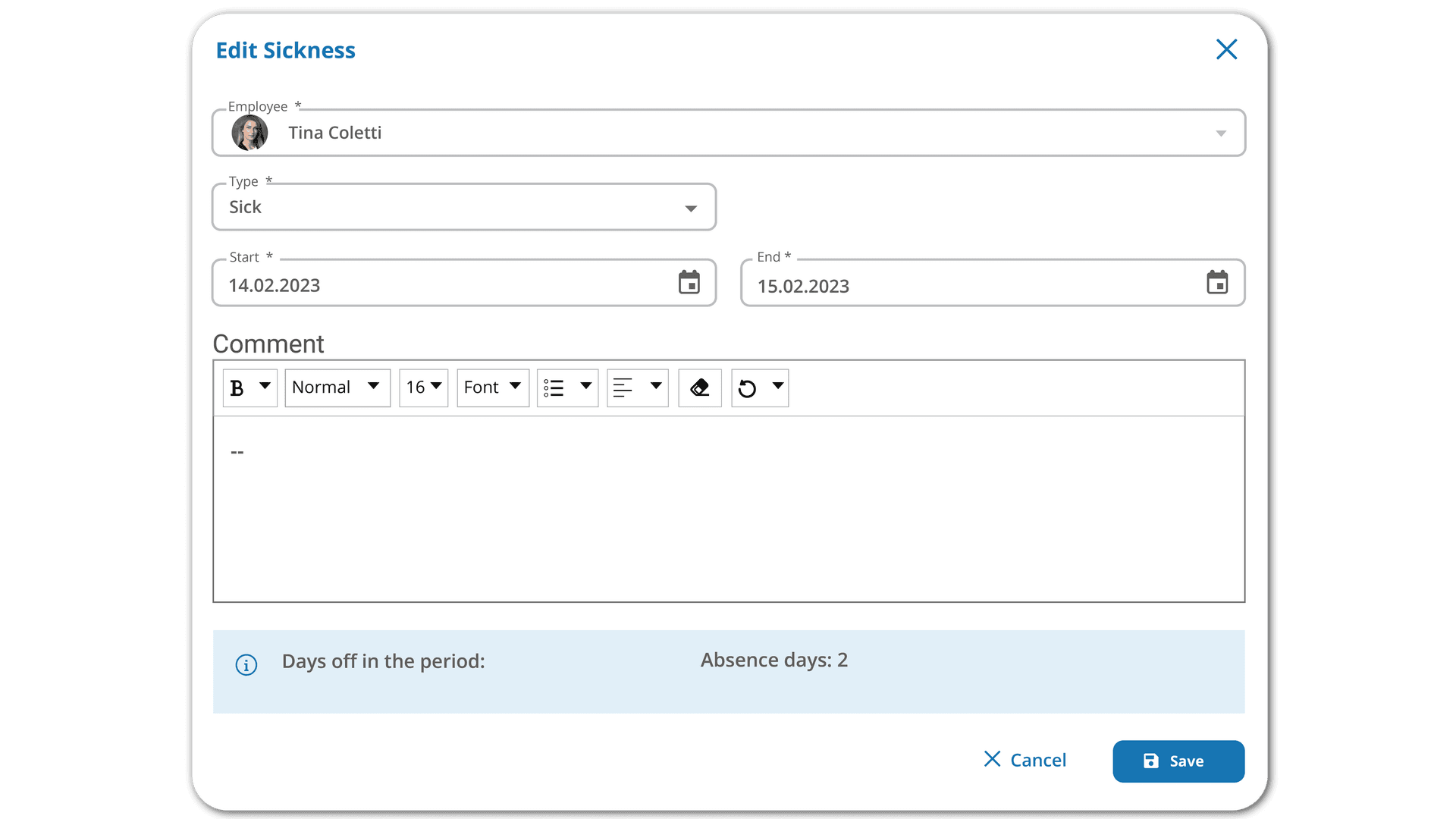
With HR software like HRlab, electronic certificates of incapacity for work can be retrieved directly via an integrated interface with statutory health insurance providers: As soon as an employee logs their sick leave in the system, the software automatically triggers the eAU data retrieval from the insurance provider and files the details directly into the digital employee file.
Extension of Sick Leave and Follow-up Certificates
A sick leave certificate or medical certificate of incapacity for work is always issued for a specific timeframe. When a follow-up certificate becomes necessary depends on when the previous period of sick leave ends. If the incapacity for work persists, a repeat doctor's appointment is required to obtain a follow-up certificate.
The employee must consult a physician again no later than the next working day following the expiration of the current sick leave period. Example: If the initial certificate expires on a Wednesday, the employee must visit the doctor by Thursday at the latest. If the sick leave ends on a weekend, it is sufficient to schedule the next doctor's appointment for the following Monday.
The health insurance provider must also be informed of the extension of incapacity for work so that continued remuneration or sickness benefits can be calculated correctly. Obtaining a follow-up certificate in a timely manner prevents the employee from being absent without a valid sick leave notice or suffering financial disadvantages.
Continued Remuneration and Wage Replacement Benefits
In cases of illness, employees are initially entitled to continued wage payments under § 3 EFZG. This means that for up to six weeks, employees continue to receive their regular salary even while on sick leave and unable to work.
Once the period of employer-funded continued pay ends, the statutory health insurance provider typically steps in with sickness benefit—a form of wage replacement benefit. Employees with statutory health insurance receive additional payments starting from the end of continued remuneration for the duration of their illness—in individual cases for up to 78 weeks, depending on the insurance coverage and individual provisions.
Sickness benefit typically amounts to at least 70 percent of gross income, up to a maximum of 90 percent of net salary. Bonuses and special payments are also factored into this calculation. Timely sick leave notification to the employer and prompt submission of the medical certificate ensure that both continued pay and sickness benefits are processed correctly and without interruption.
Retroactive Sick Leave
In exceptional cases, sick leave can also be issued retroactively. This rule applies, for example, when an employee is unable to see a doctor immediately due to the severity of their symptoms. In such situations, physicians are permitted to backdate a sick leave certificate by up to two, maximum three days.
Employee Obligations During Sick Leave
Under German labor law pursuant to § 5 of the Continuation of Remuneration Act (EFZG), employees are required to report sick leave to their employer immediately. Failure to do so can result in a formal warning. Reporting sick leave via phone or email is generally sufficient. Anyone who fails to comply with this notification duty risks receiving a warning or, in recurring cases, further employment law consequences.
When Do You Have to Report Sick Leave?
Notice of sick leave must always be given on the first day of illness. If the illness lasts longer than three calendar days, a doctor's visit is legally required. Under statutory law, a certificate of incapacity for work must be available from the fourth day of illness—including in digital form as an electronic eAU. However, some employers require a medical certificate starting from the very first day of illness, as specified in individual employment contracts or company policies.
The treating physician issues the medical note, which includes the diagnostic code, and transmits it digitally to the health insurance provider. During the COVID-19 pandemic, it became possible to obtain a sick leave certificate over the phone—this option currently remains available for mild respiratory illnesses. Online sick leave notes are also available through various providers today. Crucially: Remaining absent without reporting sick leave or submitting a medical certificate late constitutes a breach of contractual duties.
Sick Leave for Sick Children
When an employee's child falls ill, the employee has the right to take a specified number of days off work. This entitlement is governed by § 45 of Book V of the Social Code (SGB V). If both parents live together, an employee is entitled to up to ten so-called child sick leave days per year.
Child sickness benefit then covers 90 percent of the parent's net earnings. For single parents, the allowance is twenty days. This entitlement applies per child, provided the child is under twelve years old. Additionally, time off is only granted if no other person is available to care for the child. A medical certificate confirming the child's illness is also required in this case.
Also important: The extended entitlement allowances introduced during the pandemic remain in effect. This means 15 days per child per parent and 30 days for single parents. For families with multiple children, overall caps of 35 and 70 days apply, respectively.
Sickness-Related Termination
Under specific circumstances, being on sick leave can ultimately lead to the termination of an employment contract. Pursuant to § 1 of the Protection Against Dismissal Act (KSchG), a dismissal on health grounds is legally permissible if the employee has been employed for more than six months at a company with more than ten employees and the incapacity for work satisfies certain statutory conditions.
A dismissal may occur earlier if it is foreseeable that the employee will remain permanently incapacitated for work or suffers from a lasting reduction in performance capacity. In such cases, the employee's work output may fall below two-thirds of its previous level, justifying an operational termination.
However, before issuing a dismissal due to illness, the employer is legally obligated—as mentioned above—to offer an Occupational Health Management process. During this consultation, alternative deployment options, return-to-work strategies, and potential workplace modifications are discussed jointly with the employee. The objective is to prevent termination wherever possible and facilitate a successful return to the workplace.