
Advantages of HR-Software: Tomorrow Starts Today
The digital transformation doesn't stop at HR. What are the advantages of HR software? You will learn what is particularly important when using it.
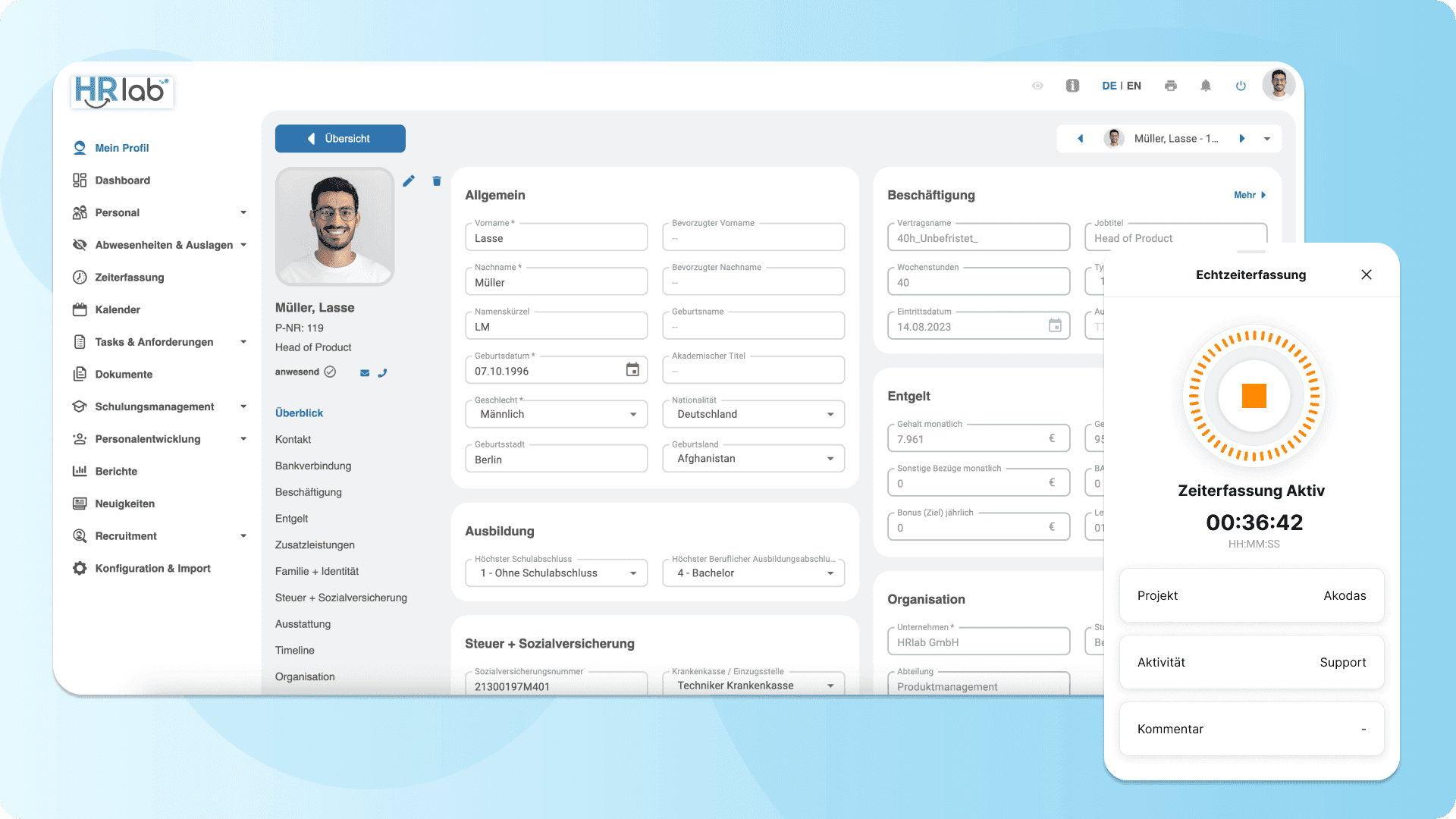
The digital transformation does not stop at HR. It offers new possibilities and opportunities for companies that want to sustainably optimize their HR processes and move them into the digital space. To achieve this goal, they need well-functioning HR-Software that can meet ever-growing HR expectations. This article provides an insight into the topic by going into more detail on important aspects and the benefits of HR software. Finally, you will learn what is particularly important when using it.
HR-Software Definition and Significance
HR-Software is the English abbreviation for Human Resources Software. It can be translated into German as a computer program for human resources. HR-Software primarily aims to facilitate strategic and operational HR work by simultaneously providing a response to the ongoing digitization of corporate processes. It comes in conjunction with HCM HR software, which takes a very comprehensive view of human resources and often spans functional HR areas.
Functions and Advantages of HR Software
Overview of Functions
Basically, HR-Software solutions are designed to simplify various HR management tasks and optimize internal process flows. Although each HR software tool may focus on certain functionalities, there are core functions that HR software providers should ensure. We are talking about core HR functions that include management of personnel data and tasks, payroll, and time and attendance management for flexible working.
In addition, HR management software can support internal talent management. In this context, it handles the complex process of recruiting and integrating new employees into the company, as well as corporate training and succession planning. A complete HR software solution is often complemented by reports and analyses of HR key figures. These allow companies to make informed people-related decisions based on reliable and insightful data.
Advantages of HR Software
There are many benefits for companies from customized functions of HR Softwares. These are mainly:
- high time savings and administrative relief through standardization of HR processes,
- Cost reduction and efficiency increase by simplification and streamlining of processes,
- confidentiality and security of (sensitive) HR data by outsourcing it to the cloud,
- good options for data evaluation and simple reporting as a basis for targeted HR planning
- fast and convenient access options across locations and countries through mobile app use
Three Steps to the Right HR-Software
There is no right recipe for the use of HR software. Much depends on a company’s people-related needs and the focus it wants to place on its HR matters. The size of the company also proves to be an important factor when choosing a solution. For example, HR software for mid-sized companies focuses on those functions that are of great benefit to small and medium-sized companies. In general, a careful HR software comparison and a transparent approach in the following steps are recommended:
Step 1: Needs and Requirements Analysis
The first step is a detailed analysis that is tailored to the company’s needs. The aim is to jointly consider and discuss what expectations are placed on HR software and which aspects are particularly important. At the same time, this step serves to define long-term goals and clarify application scenarios.
Step 2: Selection and Testing of HR-Software
Once a company has decided on a particular HR software after analysis, it is worthwhile to try it out before buying. Most HR software is available in the form of demos. Their advantage is that a company can try out the most important functions for free and make a final purchase decision.
Step 3: Integration into Existing Systems
After purchasing HR software, it is important to implement it properly. An external partner who has the necessary know-how and is familiar with industry-specific features (e.g., HR software for SMEs) can help. In addition, the introduction of HR software requires careful preparation and task distribution at team level.